
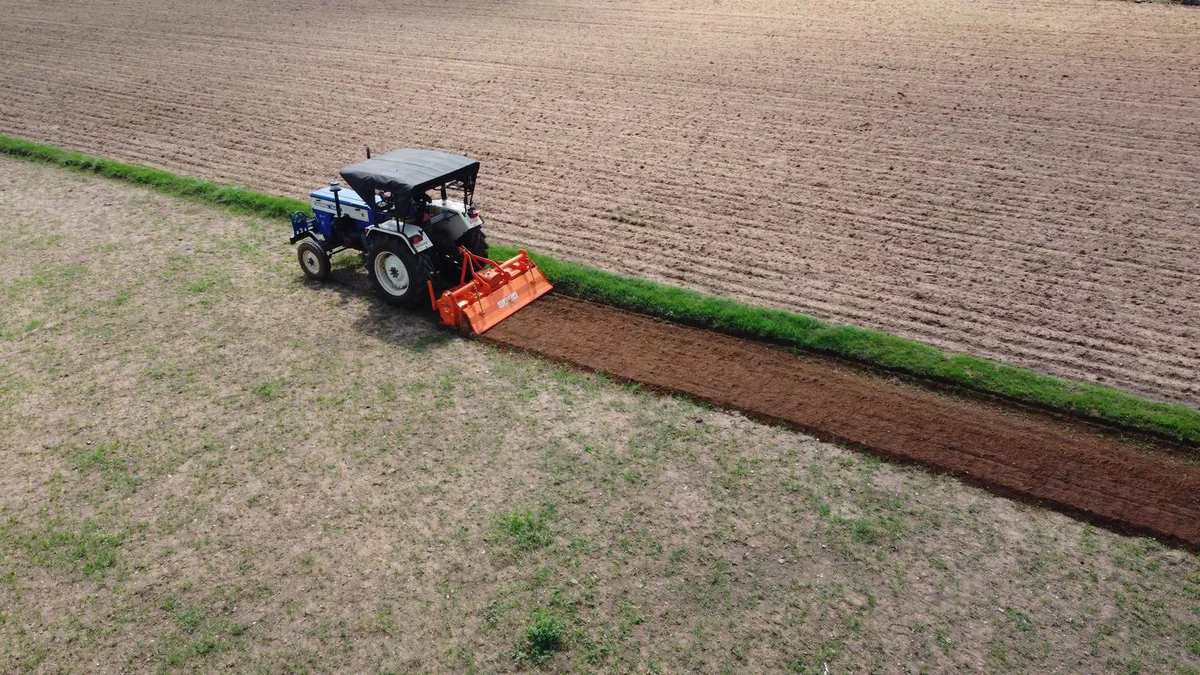
They solve different stages of the season. A rotavator is a tractor implement that prepares whole fields before sowing. A power weeder is a walk-behind machine that works between rows after the crop is up, in plots a tractor cannot fit or turn in. Choose by the job in front of you — most farms end up with both.
In this guide
They do different jobs
A rotavator is a tractor implement. It prepares whole fields — breaking clods, mixing residue and leaving a seedbed before sowing. It works in wide passes and it needs a tractor and the room to turn one.
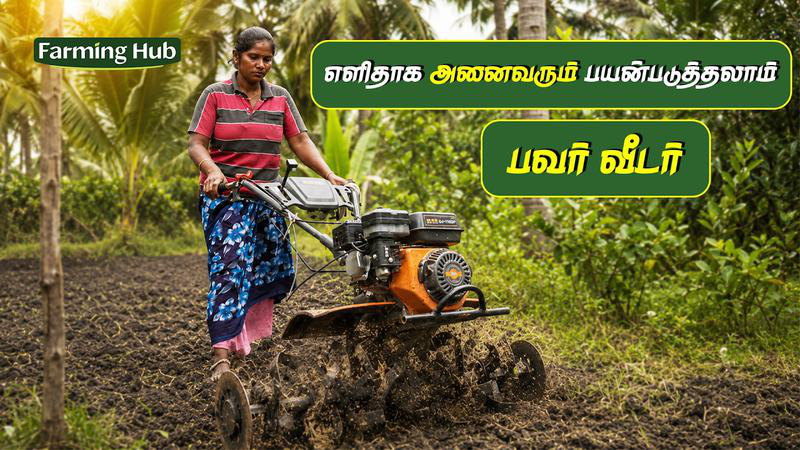
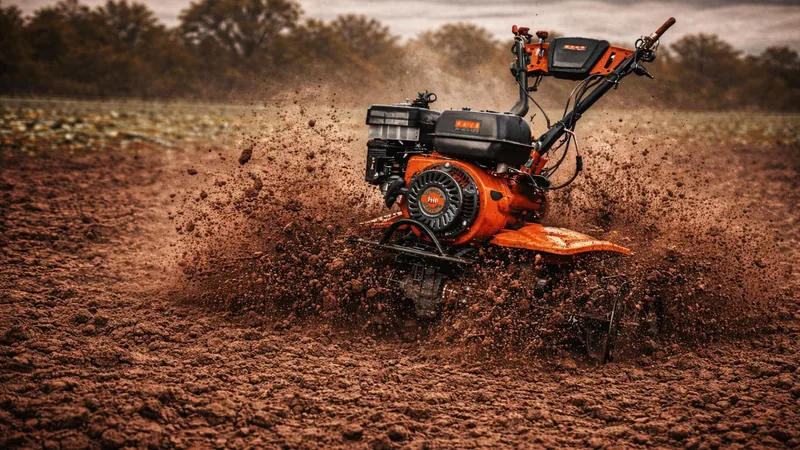
A power weeder is a walk-behind machine with its own engine. It works after the crop is up, between the rows, where a tractor would either not fit or would damage the crop.
If you are choosing between them, the first question is not which is better. It is which stage of the season you are trying to solve.
Choose a rotavator when
- You are preparing land before sowing, across whole fields.
- You already run a tractor and have the horsepower to match the width.
- Your fields are open enough for a tractor to work and turn efficiently.
- You need residue incorporated into the soil, not just weeds knocked down.
Related guide: What a power weeder actually costs to run per acre
Choose a power weeder when
- The crop is standing and you need to work between rows without damaging it.
- Row spacing is narrow, or the plot is small, terraced or irregular.
- You are in an orchard, a garden, or among trees where a tractor cannot manoeuvre.
- You want to do the work yourself rather than wait for a tractor to be free.
What customers tell us
One review on our channel puts it plainly: in places a rotavator cannot get to, the power weeder still works easily. That is the practical dividing line for most people — reach, not power.
Another common comment is about depth. There is a widely held view among the farmers we talk to that working deeper matters more than working wider. Whether that holds for your soil and crop is worth a conversation with someone who knows the local conditions.
Most farms end up with both
A rotavator for land preparation before the season, a power weeder for inter-cultivation during it. They are not competing purchases; they are two stages of the same year.
We make rotavators in-house and supply power weeders from our own Light Agri range, so we have no reason to push you toward one. Tell us the crop, the row spacing and the plot size and we will tell you honestly which one solves your problem.
Questions people ask
Can a power weeder replace a rotavator?
Not for land preparation. A rotavator works whole fields in wide passes behind a tractor and incorporates residue; a power weeder is for the standing crop, between rows. They are two stages of the same year, not alternatives.
When is a power weeder the better choice?
When the crop is standing and you need to work between rows without damaging it, when row spacing is narrow or the plot is small, terraced or irregular, in orchards and gardens, or when you want to do the work yourself instead of waiting for a tractor to be free.
When do I need a rotavator?
When you are preparing land before sowing across whole fields, you already run a tractor with the horsepower to match the width, your fields are open enough to turn in, and you need residue mixed into the soil rather than just weeds knocked down.