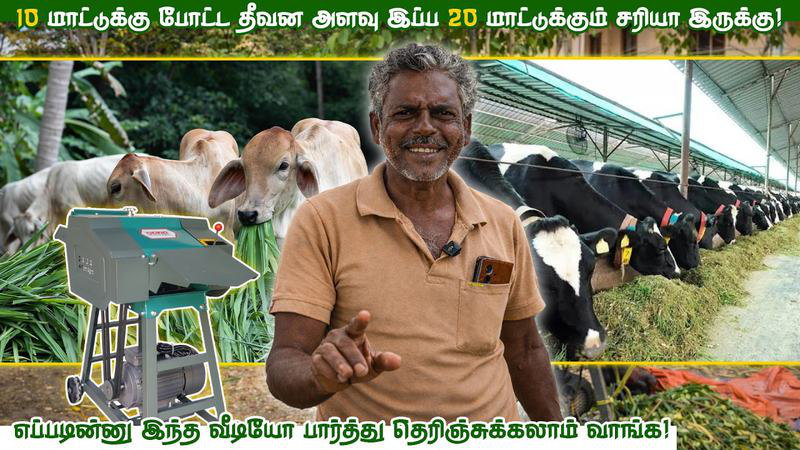

Cattle fed long fodder sort it: they eat the soft leaf and leave the coarse stem to be trampled and thrown away. Cut to an even length, the stem goes in with the leaf, so more of what you carried in gets eaten and green fodder mixes properly with dry. One dairy farmer told us the quantity he fed ten animals now does for twenty — his experience, on his farm.
In this guide
The waste is at the manger, not in the field
Fed long, cattle sort. They pull out the soft leaf and the tender top, and leave the coarse stem behind. What is left in the manger gets trampled, soiled and thrown away.
That refusal is fodder you grew, cut, carried and paid for. Cut the same fodder to an even length and there is far less to sort — the stem goes in with the leaf, and more of what you carried in actually gets eaten.
Even length does three things
- Less sorting. Uniform pieces are harder to pick through, so intake is more even across the herd.
- Less trampling. Short fodder stays in the manger instead of being dragged out and stood on.
- Easier mixing. Chopped green and dry fodder mix properly, so you can stretch expensive green fodder with cheaper dry material.
Related guide: Turning coconut fronds and prunings into compost material
What one dairy farmer found
In the video below, a farmer describes the change in his own words: the quantity of fodder he was putting out for ten animals now does for twenty. That is his experience on his farm — herd size, fodder type and feeding routine all move the number.
Whatever the exact figure on your farm, the direction is the same, and it comes from the same place: less refusal at the manger.
Choosing one — what to look at
- Capacity. Match it to your herd and how often you want to be standing at the machine.
- Guarding. A chaff cutter is the one machine in the shed that gets used by whoever is free. Proper guarding on the feed side is not optional.
- Cut length. Different fodder and different animals suit different lengths.
- Servicing. Blades need sharpening and setting. Buy where the parts and the know-how are available locally.
On safety
Several of our customers make the same point without being asked: the machine is one that anyone in the family can be sent to operate. That is only true if the guarding and the feed design are right, and it is worth checking before you buy — from any supplier.
Questions people ask
Why do cattle waste long fodder?
Fed long, cattle sort through it — they pull out the soft leaf and tender tops and leave the coarse stem. What is left in the manger is trampled, soiled and thrown away, and that refusal is fodder you grew, cut and carried.
How much fodder does a chaff cutter save?
It depends on the herd, the fodder and the feeding routine. One dairy farmer on our channel says the quantity he was putting out for ten animals now does for twenty. That is his figure on his farm; the direction is the same everywhere because there is less refusal at the manger.
What should I check before buying a chaff cutter?
Capacity for your herd, proper guarding on the feed side, the cut lengths it offers, and whether blades and servicing are available locally. The guarding matters most: it is the one machine in the shed that gets used by whoever is free.