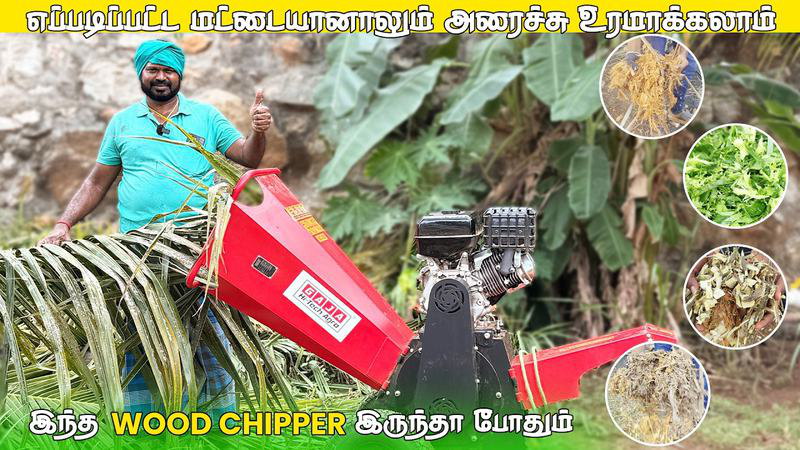

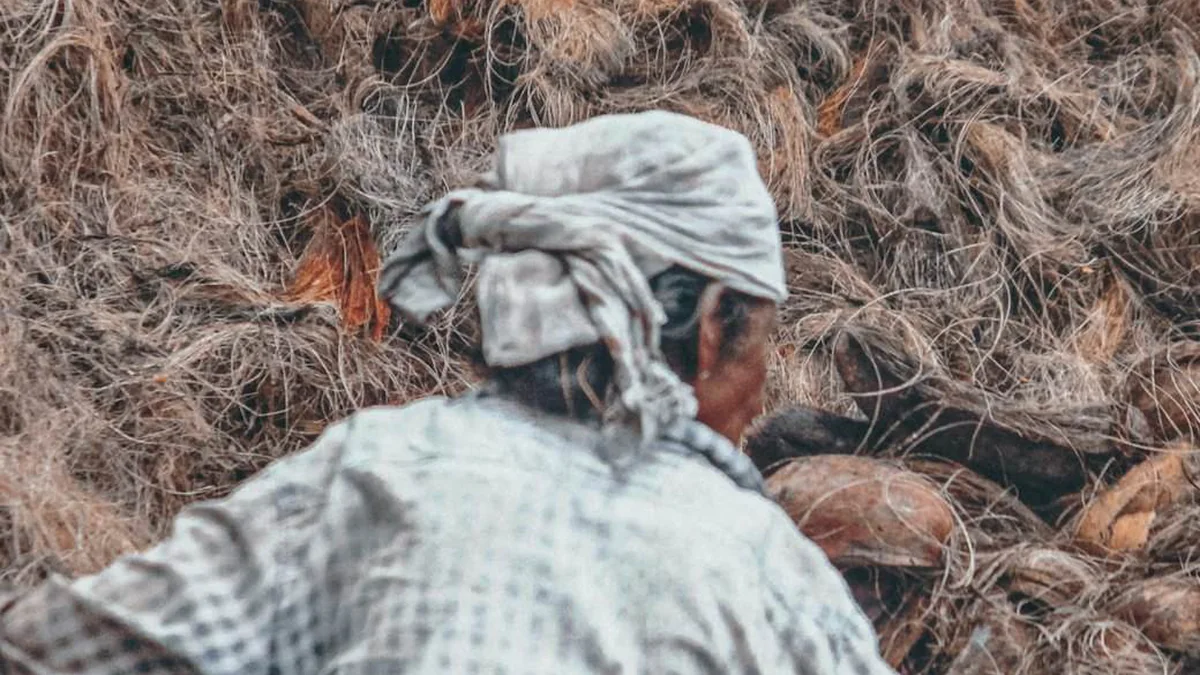
Whole coconut fronds take years to break down, so most growers burn them or pay to cart them away and the organic matter leaves the farm. Chipped, the same fronds shrink to a fraction of their bulk, compost in a fraction of the time and go back on the land as compost or mulch. One grower chipped over a thousand fronds into manure for his own plot.
In this guide
The problem with whole fronds
A coconut frond takes a very long time to break down whole. Left in a heap it sits there, takes up space and harbours pests. So most growers burn it or pay to have it removed — and in both cases the organic matter leaves the farm.
Chipped into small pieces, the same frond has far more surface area for microbes to work on. It composts in a fraction of the time and goes back into the soil it came from.
What a chipper changes
- Volume. A heap of fronds becomes a fraction of its bulk, which is often the difference between "we will deal with it later" and actually dealing with it.
- Time to compost. Chipped material breaks down far faster than whole branches.
- Cost removed. No cartage away, and no buying back organic matter you gave away.
- Mulch as well as compost. Chip can go straight around trees to hold moisture and suppress weeds.
Related guide: Why the same fodder feeds more cattle after a chaff cutter
What one grower did with it
In the video below a customer describes chipping over a thousand fronds and turning them into manure for his own land. It is his account of his own work — but it is the clearest illustration of the idea we have.
Points to check when buying
- Feed size. The maximum diameter it will take decides whether you can feed branches whole or have to cut them first.
- Engine. Ours runs a 420 cc petrol engine — enough to keep working rather than stalling on every thick piece.
- Mobility. If the material is spread across a plantation, you want the machine to go to the waste, not the other way round.
- Blades. They are consumables. Check sharpening and replacement before you buy.
Worth doing the sum
Add up what you currently spend removing or burning this material each year, and what you spend buying organic matter to put back. For plantations with steady frond and pruning waste, the two together often make the case on their own.
Questions people ask
How long do coconut fronds take to compost?
Whole, a very long time — they sit in a heap, take up space and harbour pests. Chipped into small pieces there is far more surface for microbes to work on, so the material breaks down in a fraction of the time.
Can wood chips be used as mulch?
Yes. Chip can go straight around trees to hold soil moisture and suppress weeds, as well as into a compost heap. Either way the organic matter stays on the farm instead of being burned or carted away.
What should I check when buying a wood chipper?
The maximum feed diameter, the engine (ours is a 420 cc petrol unit), whether the machine can be moved to where the waste is, and how blades are sharpened and replaced — they are consumables.